
Insurance claims
Does homeowners insurance cover water damage?
Usually yes, if the water arrived suddenly and by accident. Usually no, if it arrived slowly or came up off the ground. Here is where the line actually falls, and what to do on either side of it.
- Rapid response teams
- On standby
- Phones answered
- 24/7
- Counties & boroughs
- 7
Certified & licensed · Fully insured · We handle your insurance
Our certifications and credentials
IICRC Certified Technicians
Industry standard certification
OSHA Certified
Safety trained crews
25+ Years Experience
Ownership, in restoration
Licensed & Insured
Certificate on request
The short answer
Sudden and accidental is covered. Gradual is not.
A standard homeowners policy covers water damage that is sudden and accidental: a burst pipe, a failed supply line, a water heater that lets go overnight. It does not cover water damage that is gradual, and it does not cover flood. Those two exclusions are where almost every declined water damage claim lives.
The distinction is not about how much water there is. It is about how it got there and how long it took. Two hundred gallons through a split washing machine hose in ten minutes is a covered peril. Two hundred gallons through a pinhole leak over four months is maintenance, and your insurer will say so. This is the single most useful thing to understand before you call anyone, because it tells you what the conversation is going to be about.
Flood damage is its own category and its own separate policy. Rising water, storm surge and tidal flooding are excluded from every standard homeowners policy in the country, which is why the National Flood Insurance Program exists. Heavy rain is where people get caught: rain that comes through a roof the storm opened is one thing, and rain that pools on the ground and comes in at the foundation is another. Wind-driven rain through a roof the same storm damaged is usually a homeowners claim. Water that crossed the ground before it reached your house is usually not. On the South Shore and along the barrier islands that distinction decides which policy pays, so photograph the entry point early.
Read this as general, not specific
Everything below is how standard policies usually behave. Your declarations page and your endorsements are the only documents that decide your claim, and they differ between carriers and between years on the same carrier. We are a restoration contractor, not an insurance agency, and we will not tell you that you are covered when only your insurer can say that.
Covered and excluded
What water damage does home insurance cover?
The lists below hold for a standard homeowners policy. Renters, condo and flood policies redraw them, and the table further down shows how.
Typically covered
- A burst pipe, a failed supply line, or a split washing machine hose
- A water heater that lets go
- An overflowing tub, sink, or leaky toilet, where the overflow was accidental
- Rain that gets in through storm damage the same storm caused, such as a roof opened by wind
- Firefighting water, as part of the fire claim
- Freezing pipes, provided the house was heated or properly winterised
Typically excluded
- Gradual leaks. A slow leak inside a plumbing wall for six months is wear and tear, not a sudden event
- Flood, meaning surface water and storm surge, which needs a separate flood insurance policy
- Sewer and drain backup, unless you bought the water backup endorsement
- Sump pump failure. If the sump pump fails during an outage, that is the water backup endorsement again, not standard cover
- Damage caused by poor maintenance, neglect or negligence. A repair you were told about and did not make is your responsibility, not the insurer’s
- The failed part itself. The policy pays to repair the damage, not to replace the pipe that caused it
Two of those exclusions are worth buying your way out of. Water backup covers sewer and drain backup and, on most carriers, sump pump failure. It is an endorsement, it is inexpensive relative to the loss it covers, and in combined-sewer neighbourhoods it is the difference between a covered claim and a five-figure bill. If your basement is finished and your street floods, ask your agent to add that insurance coverage by name — it is the cheapest way to protect against the one risk your policy is most likely to leave you holding.
By policy type
Renters, condo, homeowners and flood policies compared
Same water, four different answers, depending on which policy you hold and what the water did.
| Policy | What it insures | Water damage | Flood |
|---|---|---|---|
| Homeowners (HO-3) | Yes - the building and your belongings | Sudden and accidental only | No. NFIP or private flood |
| Renters (HO-4) | No - your landlord insures the building | Your belongings, and your liability if you caused it | No. Contents flood cover is sold separately |
| Condo / co-op (HO-6) | From the walls in, plus your loss assessment | Sudden and accidental, inside your unit | No. The building master policy is separate again |
| Flood (NFIP or private) | Building and contents, bought separately | Rising water, storm surge, and tidal flooding | This is the policy that pays |
The condo and co-op case is the one people get wrong most often, and in Manhattan and Brooklyn it comes up weekly. A riser fails on a high floor and four units are wet. The building master policy covers the structure, your HO-6 covers your unit from the walls in, and your neighbour’s carrier may come after whoever owned the failed part. Do not wait for that to resolve before drying starts — the argument takes weeks and the mould takes days.
Mold
Does homeowners insurance cover mold?
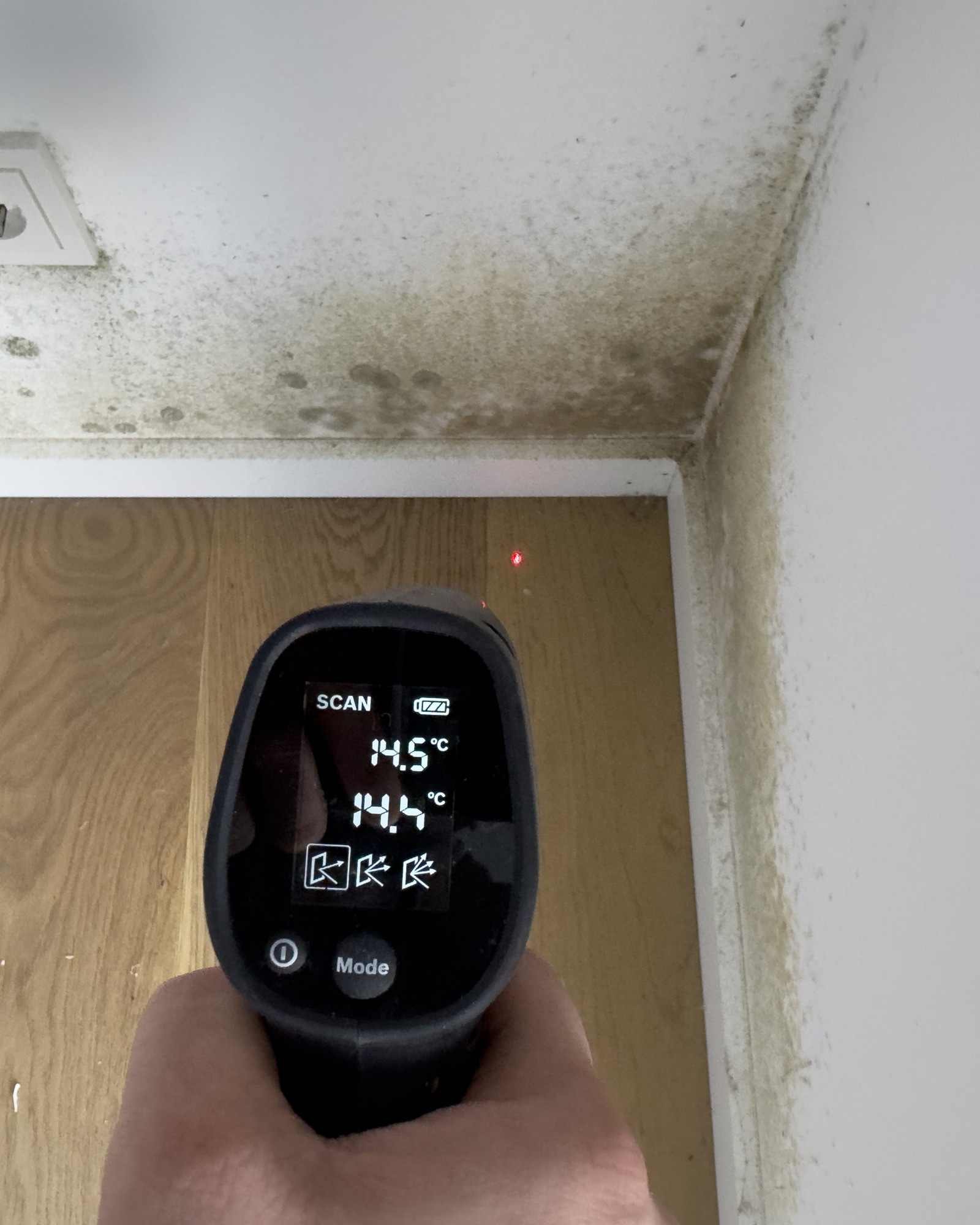
Only when the mold is the consequence of something the policy already covered, and usually only up to a sublimit written specifically for mold. Mold that follows a reported burst pipe is normally part of that claim. Mold that grew out of a leak nobody reported, or out of humidity, condensation, or a basement that has always been damp, is normally excluded outright.
That structure is why the reporting order matters more than anything you do afterwards. Report the water loss when it happens, even if you think you have it under control, because that report is what the mold claim later attaches to. Past roughly 48 hours a drying job becomes a remediation job, and a remediation job with no water claim behind it is one you are usually paying for yourself.
One more thing worth knowing before you call anyone: New York State requires the company that assesses mold and the company that remediates it to be separate businesses. Any contractor who offers to test your mold and then remove it is describing an arrangement the state does not allow. We do not clear our own work — an independent hygienist does — and that third-party clearance report is also the document your carrier will want.
How mold remediation actually runs, step by step, including containment and clearance testing.
Call us
Document it before you move anything
The single most useful call you can make in the first hour is one that gets the damage metered and photographed while it is still fresh. That record is what your adjuster works from, and it costs you nothing to have too much of it.
Answered 24 hours a day, 7 days a week
Filing
How to get insurance to pay for water damage
Nothing here is a trick. It is the same claim, documented well enough that an insurer has nothing left to argue about.
01
Stop the water
Shut it off at the main before anything else. An insurer can reduce a claim for damage that continued after you knew about it, and this one step decides how big the job is.
02
Photograph everything
Before you move a single item. Wide shots for context, close shots for detail, and the failed part itself. You cannot go back and take the before photo later.
03
Report it the same day
Call the carrier with your policy number and a plain description of what failed and when. Do not speculate about cause on that call. Say what you saw, not what you think it means.
04
Start mitigation
Every policy obliges you to prevent further damage, and none of them require you to wait for an adjuster to authorise emergency drying. Waiting is the failure mode, not acting.
05
Keep the moisture log
Daily readings from every affected surface, dated. This is what separates a documented dry-out from an invoice, and it is the evidence an adjuster’s estimate gets checked against.
06
Get a line-item estimate
Not a lump sum. Carriers price line by line, and a lump-sum bid from a contractor cannot be compared to an adjuster’s estimate, which is how scope gets quietly dropped.
One thing we will not do is quote a restoration price over the phone, because anyone who does is guessing. What we will do is get the water out, meter the structure daily, and hand you and your adjuster the same documented scope, so the argument is about the work rather than about what happened.
Settlement
Actual cash value or replacement cost?
Your policy is a contract, and the clause that decides how many dollars actually reach you is the loss settlement clause. Replacement cost pays what it costs to replace what was damaged today. Actual cash value pays that figure minus depreciation for age and wear. On fifteen-year-old carpet and a fifteen-year-old water heater, the difference is not marginal.
Most replacement-cost policies pay in two parts: actual cash value up front, and the depreciation held back until you have actually done the repair work and sent the invoices. That is not an insurer being difficult, it is how the clause is written — but it does mean the first cheque is generally smaller than the estimate, and people who do not expect that assume their claim was underpaid when it was not. Ask which one you hold before a loss occurs, not after.
Your deductible comes off the top either way. For example, a four-thousand-dollar drying and repair scope against a two-thousand-dollar deductible is a very different decision from the same scope against a five-hundred-dollar one, which is why the worth-it question above is worth asking before you report anything.
Category
Why the water’s category changes the estimate
Adjusters price by category, not by volume. It decides what can be dried and what has to come out, which is most of the difference between a three-day job and a three-week one.
- Category 1 — clean
- Supply-line water. A burst pipe, a failed hose, an overflowing tub. Most materials can be dried in place if you reach them fast. Left for 48 hours it degrades to category 2 on its own.
- Category 2 — grey
- Appliance discharge, dishwasher and washing machine water, a toilet overflow with no solids. Carpet pad and some porous materials come out; structure is usually still dryable.
- Category 3 — black
- Sewer backup, septic, and any floodwater that crossed the ground. Porous materials are removed rather than dried and everything remaining is decontaminated. This is the expensive one.
Category also interacts with coverage. Category 3 water from a sewer backup is only covered if you hold the water backup endorsement; category 3 water from a flood needs the flood policy. Same black water, two entirely different claims, decided by where it came from. Our water damage restoration and storm and flood pages set out what each job actually involves.
FAQ
Insurance questions, answered straight
If yours is not here, call and ask. You will get a straight answer, not a callback from a sales team.
What kind of water damage is not covered by insurance?
Is it worth going through insurance for water damage?
How long after water damage can you claim on insurance?
Will my premium go up if I file a water damage claim?
Should I tell my insurance company about mold?
Do you bill my insurer directly?
Services
What we restore
Every service below is documented to carrier standards as a matter of course, because the paperwork is half of what you are buying.
Water Damage Restoration
Standing water extracted, structure dried to measured moisture targets, and documentation your insurer will accept.
Learn more24/7 emergencyFire & Smoke Damage Restoration
Board-up, soot and odor removal, contents cleaning, and rebuild, coordinated as one job instead of five vendors.
Learn more24/7 emergencyMold Remediation
Containment, HEPA filtration, and source repair, performed to New York State licensing requirements with third-party clearance.
Learn moreBy appointmentStorm Damage Restoration
Wind, hurricane, nor'easter and coastal surge damage for properties on the South Shore, the barrier islands, and the harbor edge.
Learn more24/7 emergencyBiohazard & Trauma Cleanup
Discreet, OSHA-compliant cleanup of trauma scenes, sewage, and other hazardous materials, in unmarked vehicles, handled by technicians trained for it.
Learn more24/7 emergencyAsbestos Abatement
Survey, containment, controlled removal and third-party clearance testing, filed and documented to New York State requirements.
Learn moreBy appointmentCommercial Restoration
Large-loss response for property managers, retail, healthcare, and multifamily, scoped around keeping you operating.
Learn more24/7 emergency
Where we work
Crews across both markets, and a claim documented the same way in each.
Get it documented before it gets argued about
Tell us what failed and when. We will tell you honestly whether it needs a truck tonight, and what your adjuster is going to want to see either way.
Answered by a person, 24/7· Rapid response teams on standby· We handle your insurance