
Brooklyn · emergency service, 24/7
Sewage Backup Cleanup in Brooklyn
Sewage in a cellar is category 3 black water, and it is a health hazard before it is a property loss. Extraction, removal of what cannot be decontaminated, disinfection and drying — with crews across Brooklyn 24 hours a day.
- Rapid response teams
- On standby
- Phones answered
- 24/7
- Counties & boroughs
- 7
Certified & licensed · Fully insured · We handle your insurance
Our certifications and credentials
IICRC Certified Technicians
Industry standard certification
OSHA Certified
Safety trained crews
25+ Years Experience
Ownership, in restoration
Licensed & Insured
Certificate on request
Local conditions
Why Brooklyn cellars take the sewage backup
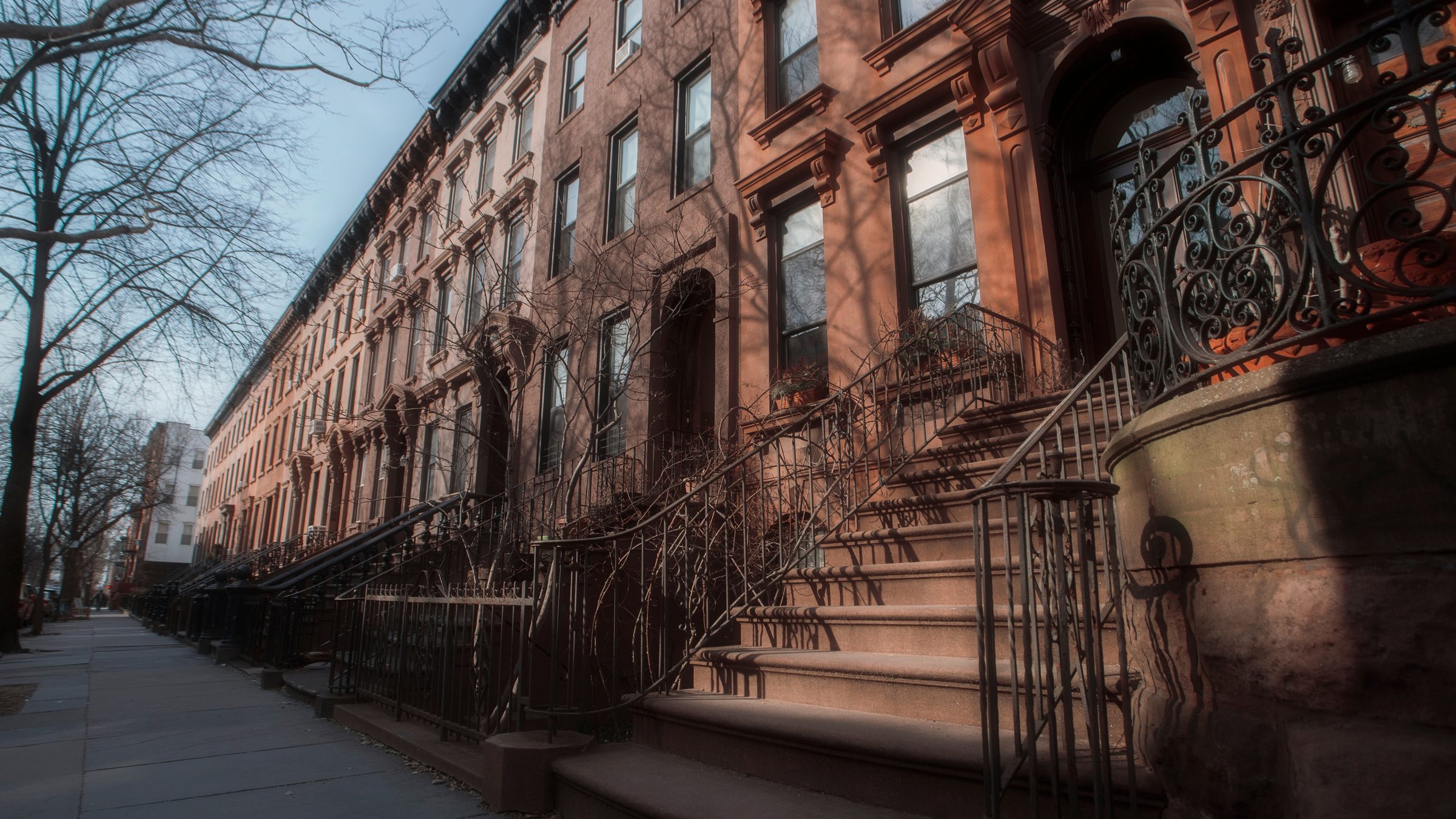
Brooklyn is party-wall territory — attached brownstones and row houses — and that changes the job. Water in one brownstone does not stay in one brownstone, so the first thing we do on a row-house loss is meter the neighbors before anyone starts drying. Red Hook, Gowanus, and the Columbia Street waterfront sit at or near the surge line and flooded severely in Sandy. Cellar-level commercial space along the avenues carries the same below-grade exposure as residential, usually with far more inventory sitting directly on the slab.
The combined sewer, and what surcharge means in your cellar
Most of Brooklyn sits on a combined sewer system: a single pipe carrying household wastewater and street stormwater together. On a dry day it handles the sanitary flow with room to spare. In a heavy downpour, run-off pouring in through every catch basin on the block arrives faster than the pipe can move it, and the main surcharges — it fills completely and goes under pressure instead of flowing.
Pressurised sewage looks for the lowest opening connected to that line, and in a row house that is not the street. It is the cellar floor drain, the basement toilet, the laundry sink or the shower pan in the below-grade apartment. Nothing in your building has failed. The street is simply fuller than the pipe, and your cellar is the relief valve. That is also why so many of these calls arrive in the same hour across a whole neighbourhood.
Some of that overflow is designed to discharge to the waterways rather than into buildings — the combined sewer overflow outfalls along the Gowanus Canal and Newtown Creek exist for exactly that reason. What reaches a cellar is the part the system could not relieve fast enough, and it is the same untreated mix.
House traps, backwater valves and cellar floor drains
The house trap
A U-bend on the building drain, usually at the front wall of the cellar, fitted as standard in older New York buildings. It catches grease, wipes and root debris, and a blocked one backs the whole building up on a dry day with no rain involved at all. Plumbers find it first for a reason.
No backwater valve
A backwater valve is a one-way flap on the building drain that closes when the main tries to push back. A large share of pre-war Brooklyn stock does not have one, and on a fixture below street level it is the single most effective thing that can be fitted after the fact. We do not install them, but it is the conversation to have with your plumber once this is cleaned up.
The cellar floor drain
The lowest opening in the building, and the first place a surcharge shows. It often gives warning: a gurgle when a toilet upstairs is flushed, or a sewer smell in the cellar days before any water appears. Both are worth acting on.
Roots and old laterals
Street trees on a Brooklyn block are older than most of the plumbing they grow next to. Root intrusion into a clay lateral is a slow blockage that behaves like a capacity problem until someone puts a camera down it.
Sewer backup on your line, or on the city main?
The practical test on arrival is simple. One fixture backing up in one building is almost always a blockage on that building drain. Several fixtures at once, or the whole block at once, points at the sewer main in the street. That distinction decides who fixes the cause, who is likely to pay, and whether it is going to happen again the next time it rains.
It matters for a second reason too. Sewage spills that come off the public main are a different conversation with your insurer and with the City than a sewage problem that starts at your own house trap, and property owners who establish which one it was on day one have a far easier time later.
Category 3
Sewage is black water, and that is a health hazard
Restoration classifies contaminated water in three categories, and every sewage backup is category 3 from the moment it happens. It does not have to look dirty and it does not have to smell yet. What makes it dangerous is not visible.
The three categories of contaminated water
| Category | What it is | What it means for the job |
|---|---|---|
| Category 1 | Water from a clean source. A broken water supply line, a burst pipe, a failed water heater. | Most materials dry in place if it is caught fast. Left untreated in a warm cellar it degrades on its own within about 48 hours. |
| Category 2 | Grey water. Washing machine or dishwasher discharge from appliances, a sump overflow, or a toilet overflow carrying urine but no solids. | Carpet padding and porous materials come out. Hard surfaces are cleaned and treated rather than simply dried. |
| Category 3 | Black water: sewer water carrying feces. Any sewage backup, a toilet overflow past the trap, a sewer main surcharge, or flood water that has crossed the street or the ground. | Grossly contaminated. Porous materials are removed and disposed of, not dried. Everything remaining is cleaned and disinfected, and the space is treated as a health hazard until it is verified. This is not a DIY job at any volume. |
What is actually in it
Raw sewage carries harmful bacteria — E. coli, salmonella, shigella, campylobacter — along with viruses including hepatitis A, norovirus and rotavirus, and parasites such as giardia and cryptosporidium. In a confined cellar it also produces sewer gas, which is an irritant at low concentration and worse than that in a space with no ventilation.
The realistic exposure routes are ordinary ones: hand to mouth, water into a cut or a graze, and aerosols raised by walking through it or by a wet vacuum that was never designed for this. Illness from a sewage backup is usually gastrointestinal, sometimes a skin or wound infection, and occasionally severe illness. Children, older adults, pregnant women and anyone immunocompromised should be out of the space entirely, not standing at the bottom of the stairs looking.
Anything the water reached that goes near a mouth is finished. Food, including sealed packaging and anything in a cellar chest freezer, gets thrown out rather than washed. Clothing and linens that were in the affected area can be laundered, but in hot water and separately from everything else — and if that is not practical, they go with the rest of the contaminated waste.
Sewage damage, and the mold growth behind it
Contamination is the first problem; moisture is the second one, and it starts the same day. A Brooklyn cellar is cool, still and dark, which is close to ideal for mold growth once everything in it is wet. That clock runs somewhere between 24 and 72 hours, and it does not stop because the water has been mopped.
This is why the sequence matters more than the speed of any single step. Water out, contaminated materials out, hard surfaces cleaned and then disinfected, structure dried to a meter reading. Skip straight to drying and you have dried contamination into the building. Skip the drying and you have a sanitized cellar with a mold problem three weeks behind it.
The other reason to move quickly is that the repairs get bigger the longer the sewage damage sits. Drywall wicks, subfloor swells, fasteners corrode and a boiler that could have been cleaned and recommissioned becomes a replacement. To avoid mold growth and to protect what is still salvageable, the useful window is measured in hours, not in days.
Before we arrive
What to do while the crew is on its way
In order. The first three are safety and they matter more than anything you could save by moving faster on the rest.
Stop using water in the building
Every flush, sink and washing machine cycle goes to the same line that is already backing up. Tell everyone in the house, and in a multi-unit building tell the other units too.
Keep people and pets out
Close the cellar door. Nobody goes down for a look, and children and pets stay upstairs. This is the instruction people ignore and then regret.
Do not walk into standing water
Not until the power to that space is confirmed off. If the panel or the outlets are below the water line, call the utility first, not us.
Ventilate if you safely can
Open a cellar window or an areaway door from outside the space. Do not run the HVAC if the return is down there — that spreads contaminated air through the rest of the building.
Report it to 311
So DEP has a dated record and can check the main. If the city sewer turns out to be the cause, that report is what any claim against the City rests on.
Photograph before anything moves
From the doorway, wide then close. Note the time. Do not start bagging things up — where they were sitting is part of the record.
Protective gear, if you genuinely have to go in
The honest answer is that you should not. If you must — to shut a valve, to reach a pet — then rubber boots and heavy gloves, nothing bare, eye protection if the water is moving, and nothing you intend to wear again. Wear rubber boots even for one step onto the bottom stair. Wash hands and forearms with soap and hot water afterwards, before touching anything else, and keep the clothes you had on out of the general laundry.
What not to reach for
A mop and a bucket of bleach is the standard advice and it is wrong on this job. A bleach solution is mostly water: on carpet, drywall or unsealed masonry it carries contamination deeper into the material rather than killing it through, and in an unventilated cellar mixing it with another cleaner produces gas nobody should be breathing. A household wet vacuum is worse — it aerosolises what it picks up and vents it back into the room at head height, and afterwards the machine itself is contaminated. What makes this work is not harsh chemicals; it is removing what cannot be saved, and then the special equipment to extract, disinfect and dry what can.
Disinfectant is a real step. It is just the third one, applied to a hard surface that has already had the residue removed, not sprayed over a wet carpet as a substitute for taking the carpet out.
Our process
The sewage cleanup process, step by step
No step here is optional and none of them can be reordered. If a contractor skips one, ask which.
01
Make the space safe before anyone goes in
Electricity first. A cellar with sewage water across the slab and live outlets or a panel at knee height is the one part of this that can kill you, which is why we ask you to stay out until the circuit is confirmed dead. Confined below-grade space with wastewater in it can also hold sewer gas, so the space gets ventilated before it gets worked.
02
Find out whether it is your line or the city main
A backup at one fixture in one building is usually a blockage on that building drain. Several fixtures at once, or several buildings on the block at the same time, points at the sewer main in the street. That answer changes who fixes the cause, who pays, and whether it is about to happen again tonight.
03
Extract the sewage water
Pumps take the standing volume, then truck-mounted and portable extraction takes what a pump physically cannot lift. Solids and debris are removed and bagged for disposal rather than pushed toward the drain that just failed.
04
Remove what cannot be decontaminated
Carpet and carpet padding, particleboard, wet insulation and the lower section of drywall come out and are disposed of as contaminated waste. This is not us being cautious. Porous materials that have taken grossly contaminated water do not get returned to service, at any price.
05
Clean, disinfect, then dry
Hard surfaces are cleaned first and disinfected second, in that order, because a disinfectant applied over sewage residue is mostly decorative. Then air movers and dehumidifiers run the structure down against daily meter readings, because a damp cellar after a sewage event is a mold problem waiting on a calendar.
06
Deodorize, verify and document
Odor is treated at the source, not masked, and the space is checked before we call it finished. You get photographs, a moisture log, a disposal list and a line-item scope in the format adjusters and the City expect.
The clock started when the water did
What happens if you wait
Restoration is priced by how far the damage got, and damage is a function of time. This is the progression we see on almost every untreated water loss.
Minutes
Water finds every porous thing you own
It wicks up drywall, under flooring, and into subfloor and insulation. What you can see on the floor is a fraction of what is already wet.
1-24 hrs
Drywall swells, finishes bleed, odor starts
Furniture legs stain carpet. Laminate delaminates. Paper-faced drywall loses structural integrity and the first musty smell appears.
48-72 hrs
Mold begins to colonize
This is the line that changes the job. Past roughly 48 hours a drying job becomes a remediation job, and the cost and disruption both step up.
1 week +
Structural damage and health risk
Wood warps and swells, fasteners corrode, and spore counts climb. Restoration times and costs rise sharply, and some contents stop being salvageable.
Timelines describe typical residential water losses under normal indoor conditions. Category, temperature, humidity, and materials all shift them. An on-site inspection is the only way to know where your property sits.
Call us
Sewage in the cellar right now?
Call. A person answers, day or night, and you will get a straight answer about whether this needs a crew tonight or an inspection in the morning. If it can wait, we will tell you that too.
Answered 24 hours a day, 7 days a week
Brownstone cellars, basement apartments and cellar-level stores
Brooklyn puts more living and trading space below the sidewalk than almost anywhere else in the region, and that is what turns a sewer backup from a maintenance problem into an urgent one. Until it has been cleared, a cellar with sewage in it is a hazardous space rather than a dirty one, and sewage cleanup in Brooklyn is nearly always being done under somebody’s floor.
Occupied below-grade apartments. When category 3 water reaches a cellar apartment, the unit is not habitable until it has been cleaned, disinfected, dried and verified. That is a housing problem on a clock, and it is the situation where waiting until Monday is genuinely not an option.
Brownstone and row-house cellars. Usually the mechanical room as well as storage: boiler, water heater, electrical panel, laundry. A sewage backup here is a decontamination job with a utilities conversation attached, and the boiler is often the thing that decides the schedule.
Cellar-level retail and storage. Inventory sitting directly on the slab along the avenues. Everything porous that touched the water is a total loss, and the number that matters to the tenant is days closed rather than square feet cleaned.
Attached buildings on a shared block. When the main surcharges, it does not pick one address. If your neighbours got it at the same moment, that is worth establishing on day one — it changes the cause, the paperwork and the argument about who pays.
Insurance, and the report that has to exist first
Sewer and drain backup is usually an endorsement rather than something a standard homeowners or renters policy already covers, and the sub-limit is often far lower than a finished cellar loss. That is worth reading before you need it. Where a backup was caused by the city main rather than by anything in your building, there is a separate claim route against the City — and it depends on a 311 report filed on the day and photographs with dates on them.
Either way the documentation is the job. We photograph and inventory before anything moves, keep a disposal list rather than quietly bagging things out, log moisture readings daily, and write the estimate in the line-item format adjusters expect. We bill most carriers directly. The claim stays yours — you should not have to project-manage it from a building you cannot use. More on how that runs on our insurance claims page.
Full protective gear is not theatre on a category 3 job. Everything porous the water touched is bagged as contaminated waste before the drying equipment goes in.
Coverage
Towns and neighborhoods we cover in Brooklyn
Rapid response teams on standby across Brooklyn, 24 hours a day.
- Bay Ridge
- Bedford-Stuyvesant
- Bensonhurst
- Boerum Hill
- Brooklyn Heights
- Bushwick
- Canarsie
- Carroll Gardens
- Clinton Hill
- Coney Island
- Crown Heights
- Dyker Heights
- Flatbush
- Fort Greene
- Gerritsen Beach
- Gowanus
- Gravesend
- Greenpoint
- Marine Park
- Mill Basin
- Park Slope
- Red Hook
- Sheepshead Bay
- Sunset Park
- Williamsburg
- Windsor Terrace
Do not see your town? We almost certainly still cover it —ask us.
FAQ
Sewage backup questions from Brooklyn
If yours is not here, call and ask. You will get a straight answer, not a callback from a sales team.
Can a sewage backup in my basement make me sick?
What should I do if the sewer is backing up in my basement?
Why does sewage back up in Brooklyn every time it rains hard?
Can carpet be cleaned after a sewer backup?
Does Lysol or bleach disinfect sewage?
How much does sewage backup cleanup cost?
Does homeowners insurance cover a sewage backup?
Do plumbers clean up sewage?
Related cleanup and restoration services in Brooklyn
This page is category 3 sewage. These cover clean-water losses, what a wet cellar becomes if it is left untreated, and the decontamination work that is not water at all.
- Water damage restoration, BrooklynClean and grey water losses across the borough, mitigation through rebuild.
- Biohazard cleanup, BrooklynThe decontamination side when the contamination did not arrive as water.
- Mold remediationWhat a wet cellar becomes if it sits past roughly 48 hours.
- Flooded basement cleanupThe same first 48 hours where the water came from groundwater or a sump failure.
- Where we work in BrooklynNeighbourhoods covered, and the response the borough is staffed for.
- Talk to a personTwo lines, both answered 24 hours a day, including holidays.
Every hour it sits, more of the cellar stops being salvageable
Tell us how deep it got, which fixtures backed up and how long ago, and we will tell you honestly what this needs. Crews are staged across Brooklyn right now.
Answered by a person, 24/7· Rapid response teams on standby· We handle your insurance