
New York City, five boroughs
Mold Inspection in NYC
We find the water that caused it, tell you honestly whether you need paid mold testing at all, and bring in an independent licensed mold assessor when New York says we have to.
- Clearance
- Third-party
- Phones answered
- 24/7
- Counties & boroughs
- 7
Certified & licensed · Fully insured · Documented to New York State requirements
Our certifications and credentials
IICRC Certified Technicians
Industry standard certification
OSHA Certified
Safety trained crews
25+ Years Experience
Ownership, in restoration
Licensed & Insured
Certificate on request
Local conditions
Why New York City buildings grow mold where they do
New York City fails in three ways that the rest of the region does not. People live below grade here in numbers no other market matches, so a cloudburst is a life-safety event before it is a property loss. Most of the city is on a combined sewer, which means rain and sewage share one pipe and a storm that outruns its capacity comes back up through the lowest fixture in the building rather than in through the door. And the housing stock goes up rather than out, so a failed riser or supply line on a high floor is a claim on every floor beneath it before anyone has found the shutoff.
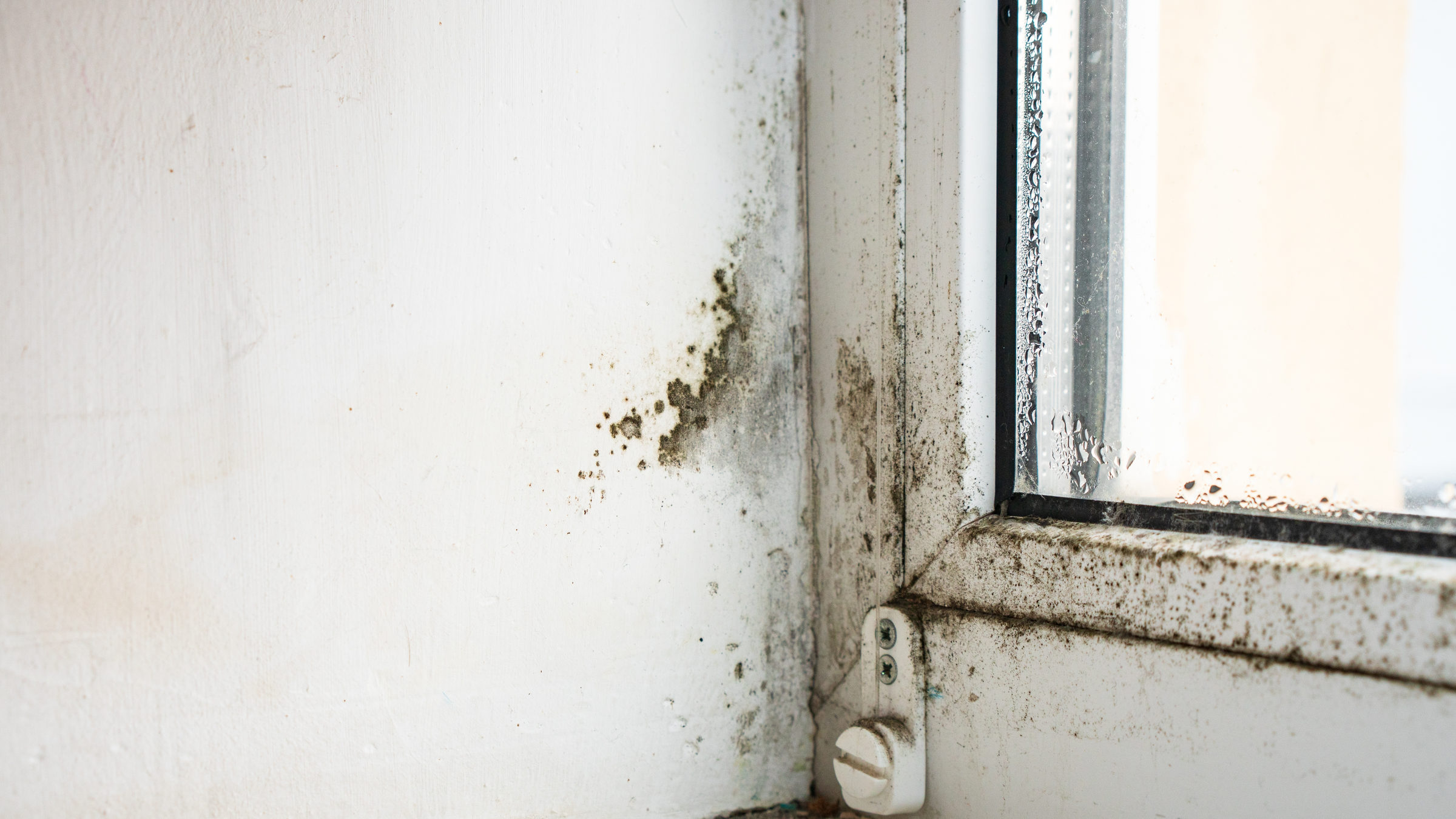
Those three failures decide where a mold inspection actually goes in this city. Vertical buildings mean the mold you can see is often two floors below the water that caused it, so the first useful question on a high-floor job is who lives above you. Below-grade living space means an apartment can hold enough moisture to start mold growth with no leak involved at all. And steam heat plus uninsulated masonry produces a specific, seasonal pattern that gets misdiagnosed as a roof leak every winter: warm indoor air hits a cold exterior wall, condenses inside the finish, and grows a black line along the window reveal and the corner of the room facing the street.
What we find behind a mold problem here, in order of frequency
- Riser and supply-line leaks migrating down through a stack, found on a lower floor months later
- Below-grade apartments, cellars and storage rooms with no dehumidification
- Combined-sewer backup through a floor drain after a cloudburst
- Condensation on cold exterior walls and window reveals in buildings on steam heat
- Bathroom exhaust fans vented into a ceiling cavity rather than outside the building
- Roof, parapet and lintel failures on pre-war multifamily stock
- Uninsulated HVAC systems and condensate lines sweating inside a chase
Mold exposure is the thing people ask about first and the thing that is hardest to answer in the abstract, because it depends on the species, the airborne concentration and the person breathing it. What is not in doubt is the risk of leaving the water in place. Mold prevention in a New York building is moisture control and nothing else, which is why commercial properties with a facilities team rarely have mold concerns and a walk-up with a slow riser leak reliably does.
None of that is fixed by killing the mold. Mold is what moisture leaves behind, so the useful half of any inspection is the half that finds the water. If the source is still running, the honest first call iswater damage restorationand structural drying, not testing. Leave it long enough and the wet material behind that wall becomes a framing and structural damage problem rather than a mold problem, and the two get repaired in a very different order.
Cost
What decides mold inspection cost in NYC
Every quote you get is built from the same six inputs. Nobody can price all six over the phone, which is why a firm number before anyone has seen the property is a guess with a decimal point on it.
Two companies can both say “mold testing” and mean completely different work. One is sending a mold inspector to find the original source and determine the extent of the mold growth. The other is taking two air samples and mailing you an indoor air quality report with no explanation of where the water came from. Before you compare prices, ask which one you are buying, and ask whether the lab analysis is included or billed separately — that split is where most hidden fees live on a mold inspection invoice in this city.
One thing to be clear about: this is not one of our emergency services. A mold inspection is scheduled work, booked around your building. What does need a same-day call is an active leak, because water leaks are what create the mold problem you are now looking at, and there is a real difference between a mold issue you can address next week and a supply line running behind a wall tonight.
| What drives the price | Pushes it up | Keeps it down |
|---|---|---|
| Square footage of the affected area | Multiple rooms, a whole basement, or growth crossing the ten-square-foot line that triggers New York licensing. | One bathroom ceiling, one window wall, one closet. |
| Number of samples | One control sample outdoors plus one per affected room, each with its own lab fee. | Visible growth with an obvious source, where sampling confirms what you can already see. |
| Access | A finished wall that has to be opened, a ceiling under a neighbour, a mechanical room the building controls. | Exposed surfaces, an unfinished basement, an accessible crawl space. |
| The building | Co-op or condo access rules: certificates of insurance, approved hours, freight elevator reservations, a super who has to be present. | A single-family house where you own the front door. |
| What the report has to prove | A record built for a claim, a board, a sale or a landlord dispute, with a lab analysis attached. | You want to know what it is and how to stop it. |
| The source repair | A riser, a roof, a failed lintel or a slab leak. This is the line that dwarfs the inspection. | A running toilet, a bad caulk line, a bathroom fan vented into the ceiling instead of outside. |
Three questions that tell you what you are actually buying.Does the price include the lab analysis or is that billed after? How many air samples, and is one of them an outdoor control? And will the report name a moisture source, or only report a spore count? A report with a number and no cause is a receipt, not an assessment — and it will not survive a conversation with an adjuster or a co-op board.
New York law
Two sets of rules apply to mold in New York City
One is state licensing, which decides who is allowed to do what. The other is city housing law, which decides who has to pay. They are different rules with different enforcement, and knowing which one you are in changes your first phone call.
State: Labor Law Article 32
Since January 2016 New York has issued three separate licences through the State Department of Labor: amold assessor, who inspects and writes the remediation plan; a mold remediation contractor, who performs the removal; and mold abatement workers. The same company may not hold the assessment and the remediation role on the same project, and the rules bite on work covering more than about ten square feet.
City: Local Law 55
Local Law 55 of 2018, the Asthma Free Housing Act, treats mold as an indoor allergen hazard. It requires owners of multiple dwellings to inspect apartments annually, correct the underlying moisture problem rather than paint over the symptom, and use safe work practices when they do. That is a landlord duty, and it does not wait for a tenant to complain.
Enforcement: 311 and HPD
If an owner does not act, a 311 complaint sends an HPD inspector, who can issue a violation against the building. NYC Health also publishes guidance on mold and on what tenants can ask for. None of that removes the mold, but it changes the conversation, and a dated private inspection report with moisture readings alongside it is what makes the complaint stick.
The practical consequence of the state rule is worth sitting with. Any mold remediation company offering to test and remediate under one contract is either working under the ten-square-foot threshold, working on an owner-occupied home where the exemption applies, or hoping you do not ask. It is a fair question and an honest company answers it in one sentence. Property managers and co-op boards hit the same rule from the other side: the board wants one invoice for the whole job, and the law will not give them one.
How we work inside that rule.We do the remediation. Formal mold assessment, the written plan and the post-remediation clearance test go to a New York licensed mold assessor who is independent of us — a professional we do not employ and do not pay for a result. We will arrange it, and you are free to appoint your own instead. We would rather you did than wonder about it. We do not clear our own work.
Once the assessment is written, the mold remediation process itself is not mysterious: containment, negative air so mold spores cannot cross from the work area into the rest of the building, removal of porous material that cannot be cleaned, source repair, and clearance. The entire process is set out on ourmold remediation servicespage. What changes from job to job is scale, not order — a bathroom ceiling and a cellar-wide mold infestation get the same six steps with very different day counts.
Our process
How a mold inspection runs in a New York City building
No step here is optional and none of them can be reordered. If a contractor skips one, ask which.
01
The call
What you can see, what it smells like, which floor you are on, and what happened before it appeared. A riser leak two floors up in March is the most useful sentence you can give us.
02
Building access first
In most of the city this starts with a managing agent. Certificates of insurance, approved work hours and a service elevator reservation are part of scheduling a mold inspection here, not an afterthought.
03
Walk the water, not the mold
Visible mold growth is the symptom. We trace it to the riser, the roof, the window lintel, the steam heat condensation or the below-grade moisture intrusion that put water there, because remediation without that repair is a redo.
04
Meter and map
Moisture meters on every affected surface and thermal imaging where a wall cavity or a shared chase is suspect. Water stains lie about their edges. A moisture meter does not.
05
Decide whether sampling earns its cost
If you can see it and smell it, air and surface samples mostly confirm what you already know. Testing earns its cost when the source is hidden, when a health issue is involved, or when a sale, a board or a claim needs a documented record.
06
Independent assessment where the law requires it
Formal mold assessment and the written remediation plan go to a New York licensed mold assessor who is not us. That separation is a legal requirement, not a preference.
07
Scope, remediate, clear
You get a written scope for the removal work. Containment, HEPA air filtration and source repair follow, and post-remediation clearance testing goes back to the independent assessor.
Call us
Not sure whether you need mold testing at all?
Call and describe it. Mold does not need the same response a burst pipe does, but the water behind it usually does, and we would rather tell you that on the phone than sell you a lab report you did not need.
Answered 24 hours a day, 7 days a week
The report
What a mold inspection report should contain
This is the part worth checking before you hire anyone, because it is the part you are actually paying for. A thorough mold assessment is not the one with the most samples. It is the one where the person holding the meter walked the whole property, checked the HVAC systems and the below-grade space rather than only the room you called about, and can tell you where the water came from.
A professional mold inspection has three parts, and only the first is guaranteed to happen. The visual inspection covers the whole building, not the one room. Moisture detection tools — a moisture meter and a thermal camera — find hidden mold and the wet material feeding it behind a finished surface. And only then, if the case warrants it, does anybody collect air samples or surface samples for a laboratory. Mold testing services that skip straight to the third part are selling you a spore count with no cause attached.
A named moisture source
Not "elevated moisture observed". Which pipe, which wall, which window, which direction it travelled.
Moisture readings, with locations
Numbers taken at identified points, so a second reading a month later means something.
Extent, in square feet
The figure that decides whether New York licensing rules apply to the removal work at all.
Photographs with scale and date
The evidence an adjuster, a managing agent or a housing court will actually look at.
Lab analysis, if samples were taken
The accredited third party lab report itself, not a summary of it written by whoever took the sample.
A scope of work
What has to come out, what can be cleaned, and what has to be repaired so it does not come back.
Below-grade space under a riser run. The growth is on the ceiling, the water came from two floors up, and no amount of cleaning the ceiling changes that.
Coverage
Mold inspection across the boroughs
The city does not have one mold problem, it has four, and the building stock decides which one you have. Crews are local to each borough, so the inspector who walks your property works in your neighbourhood routinely.
- Queens
Combined-sewer backup through basement floor drains.
Mold removal in Queens - Brooklyn
Party-wall and shared-joist water migration in row houses.
Mold removal in Brooklyn - Manhattan
Multi-unit vertical water migration from riser and supply-line failure.
Mold removal in Manhattan - Staten Island
East Shore storm surge and repetitive-loss properties.
Mold removal in Staten Island
To request an inspection, call the number above or send the short form at the top of this page. Tell us the borough, the floor and what you can smell, and somebody who does this work will call you back rather than a scheduler reading from a script.
Dedicated mold inspection pages:Queens,Brooklyn,Staten Islandand Long Island.
FAQ
Mold inspection questions we get from New Yorkers
If yours is not here, call and ask. You will get a straight answer, not a callback from a sales team.
How much does a mold inspector cost in NYC?
Are NYC landlords responsible for mold?
What are signs you need mold testing?
What level of mold is uninhabitable?
Can you sell an apartment or a house with mold in New York?
How do I report a mold problem in a NYC apartment?
Related restoration work across New York City
Inspection tells you what you have. These are the jobs that follow from it, and the water problems that cause it in the first place.
- How mold remediation worksContainment through independent clearance, without the borough specifics.
- Basement and cellar moldThe below-grade version of this problem, which is most of the city.
- Attic mold removalRoof sheathing, ventilation and the ice-dam pattern on low-rise stock.
- Water damage restorationExtraction and structural drying before a wet building becomes a mold problem.
- All restoration services in NYCWater, fire, storm and biohazard work across the five boroughs.
- Talk to a personTwo lines, answered 24 hours a day, including holidays.
Get a straight answer about the mold in your building
Describe what you can see and smell, which floor you are on, and how long it has been there. We will tell you whether this needs an inspection, a plumber, or your managing agent, before anyone quotes you for removal.
Answered by a person, 24/7